
Consultant Vascular & Endovascular Surgeon • Hyderabad
Long-term swelling caused by impaired movement of lymphatic fluid.
Lymphedema causes persistent swelling when lymphatic drainage is reduced. It may be primary or follow surgery, infection, trauma or other disease. Evaluation also checks for venous and systemic causes of swelling.
A lymphedema assessment documents onset, distribution, skin changes, previous cancer treatment or infection and other medical causes of swelling. Venous Doppler or additional imaging is used selectively when the diagnosis is uncertain or another vascular problem is suspected.
Lymphedema occurs when lymphatic vessels cannot drain protein-rich fluid effectively. Primary lymphedema relates to lymphatic development, while secondary lymphedema may follow lymph-node surgery, radiation, infection, trauma, cancer or severe obesity. Venous disease and systemic illness can also contribute to swelling.
Lymph-node removal or radiation, recurrent cellulitis, obesity, immobility, filarial infection and a family history of primary lymphedema increase risk. Because heart, kidney, liver, thyroid and venous problems can mimic limb swelling, diagnosis should not be made from appearance alone.
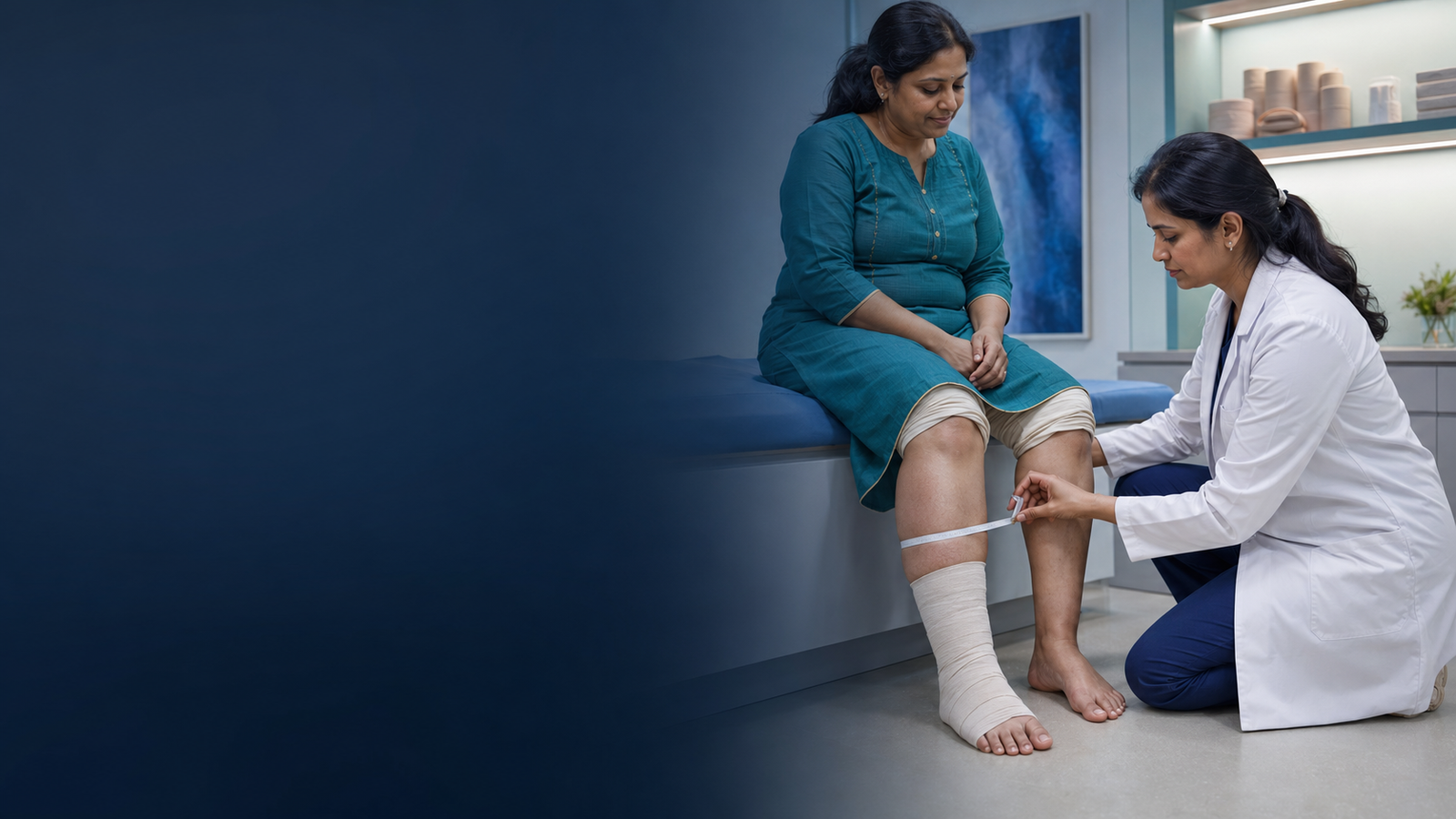
Skin hygiene, moisturising, prompt treatment of cuts, suitable exercise, weight management and professionally selected compression are important. Complex decongestive therapy may include bandaging, manual techniques and exercise. Avoid tight bands and untrained aggressive massage.
Lymphedema is usually long-term and may progress from soft swelling to tissue thickening, heaviness, reduced movement and recurrent skin infection. Good control can reduce symptoms and complications, but treatment requires regular self-care rather than a one-time cure.

Bring previous prescriptions, Doppler scans, angiography reports, wound photographs and details of earlier procedures.
These common patient questions address diagnosis, risk, treatment and when to seek care.
Lymphedema causes persistent swelling when lymphatic drainage is reduced. It may be primary or follow surgery, infection, trauma or other disease. Evaluation also checks for venous and systemic causes of swelling.
Common findings may include persistent limb swelling, skin thickening or tightness, heaviness and reduced movement, repeated skin infections. Symptoms vary, and some people have advanced disease without a typical presentation.
Lymphedema occurs when lymphatic vessels cannot drain protein-rich fluid effectively. Primary lymphedema relates to lymphatic development, while secondary lymphedema may follow lymph-node surgery, radiation, infection, trauma, cancer or severe obesity. Venous disease and systemic illness can also contribute to swelling.
Lymph-node removal or radiation, recurrent cellulitis, obesity, immobility, filarial infection and a family history of primary lymphedema increase risk. Because heart, kidney, liver, thyroid and venous problems can mimic limb swelling, diagnosis should not be made from appearance alone.
Evaluation may include clinical examination, venous doppler when required, review of surgery, infection and medicines, measurement and staging of swelling. The exact test is selected after reviewing symptoms, medical history and the vascular examination.
Lymphedema is usually long-term and may progress from soft swelling to tissue thickening, heaviness, reduced movement and recurrent skin infection. Good control can reduce symptoms and complications, but treatment requires regular self-care rather than a one-time cure.

Skin hygiene, moisturising, prompt treatment of cuts, suitable exercise, weight management and professionally selected compression are important. Complex decongestive therapy may include bandaging, manual techniques and exercise. Avoid tight bands and untrained aggressive massage.
Depending on the diagnosis, options may include compression therapy, skin care and infection prevention, specialist exercise and lymphatic therapy, long-term monitoring. A matching symptom does not automatically make a person suitable for a particular procedure.
Sudden, severe or rapidly worsening symptoms should be assessed urgently rather than through a routine online enquiry.
A lymphedema assessment documents onset, distribution, skin changes, previous cancer treatment or infection and other medical causes of swelling. Venous Doppler or additional imaging is used selectively when the diagnosis is uncertain or another vascular problem is suspected. Also bring a current medicine list and any relevant discharge or procedure records.
Narrowing of the arteries in the neck that may increase the risk of stroke.
Abnormal enlargement of the aorta that may require monitoring or treatment.
Abnormal blood vessels that may cause swelling, pain, bleeding or discolouration.
A consultation connects symptoms, examination and imaging before a treatment plan is recommended.
Specialist evaluation and treatment for conditions affecting arteries, veins, circulation, wounds and dialysis access.
Clinic contact details and consultation timings can be added after confirmation.
© 2026 Dr. Pragna Vascular. Privacy Policy · Medical Disclaimer