
Consultant Vascular & Endovascular Surgeon • Hyderabad
Vessel mapping, fistula creation and treatment of narrowing, poor maturation, thrombosis or failing dialysis access.
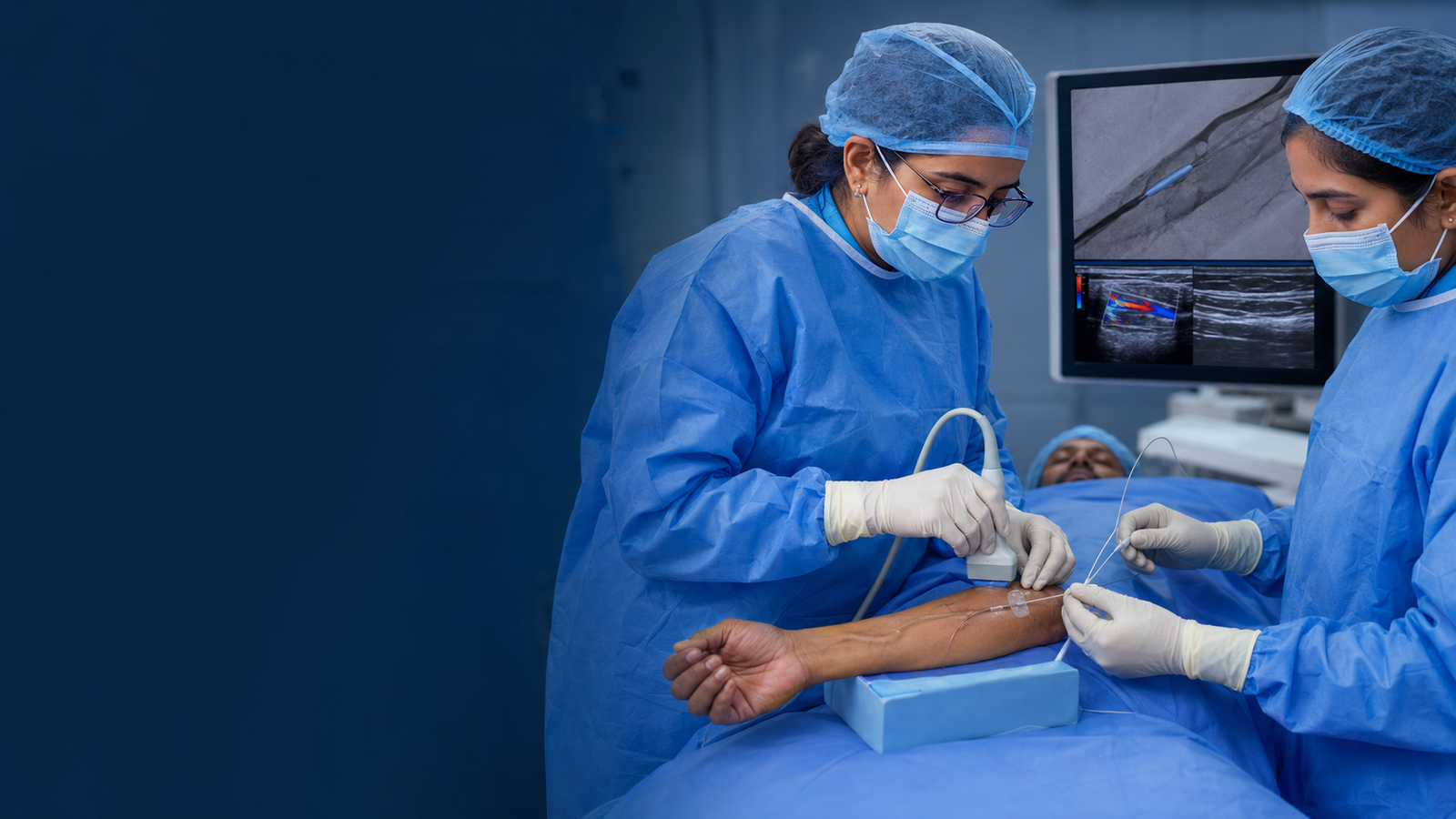
An arteriovenous fistula connects an artery to a vein so the vein can enlarge and provide reliable access for haemodialysis. Good planning begins before dialysis whenever possible. Existing access may need assessment when it matures slowly, delivers poor dialysis flow, causes prolonged bleeding, becomes swollen or loses its thrill. Salvage may involve angioplasty, thrombectomy, surgical revision or a new access plan.
Choose a site that preserves future access options
Create the artery-to-vein connection surgically or by an appropriate technique
Treat access narrowing with angioplasty when suitable
Remove clot or revise the access when timely salvage is possible
Coordinate timing with the nephrologist and dialysis unit. Bring access-flow records and details of every catheter, fistula, graft and central-line procedure. Medicine and fasting instructions depend on whether the plan is mapping, surgery, fistulogram or thrombectomy.
Fistula creation may use local, regional or general anaesthesia depending on the site and patient. Endovascular access procedures commonly use local anaesthesia with sedation when required.
Protect the operated arm and follow incision instructions. Maturation takes time and should be checked before routine needle use. After salvage, the dialysis team confirms when and how access can resume. New hand coldness, severe pain, bleeding or loss of thrill needs urgent review.
Possible complications include bleeding, infection, thrombosis, failure to mature, aneurysmal enlargement, venous hypertension, excessive flow and steal causing reduced hand circulation. No access lasts forever, so surveillance and timely reporting are important.
An AV graft or dialysis catheter may be used when a suitable fistula cannot be created or dialysis must start urgently. Peritoneal dialysis may be relevant for some kidney patients. Access choice is coordinated with the kidney-care plan.
Daily thrill checks, dialysis-flow trends and examination can identify dysfunction early. Avoid blood-pressure cuffs, blood draws and tight bands over the access arm when possible. Planned intervention is generally preferable to waiting for complete access loss.

Bring original scans, written reports, current medicines, previous procedure notes and a short timeline of symptoms.
These questions cover suitability, preparation, procedure, recovery, risks, alternatives and follow-up.
An arteriovenous fistula connects an artery to a vein so the vein can enlarge and provide reliable access for haemodialysis. Good planning begins before dialysis whenever possible. Existing access may need assessment when it matures slowly, delivers poor dialysis flow, causes prolonged bleeding, becomes swollen or loses its thrill. Salvage may involve angioplasty, thrombectomy, surgical revision or a new access plan.
It may be considered for people with advanced kidney disease with expected long-term haemodialysis, a fistula that is not maturing for needle use, low dialysis flow, prolonged bleeding or arm swelling, a weak or absent thrill suggesting narrowing or thrombosis. A consultation and imaging are required because a matching symptom does not automatically make someone a procedure candidate.
AV Fistula Creation and Salvage may be minimally invasive, open surgical or a coordinated combination depending on the exact technique. The incision, hospital stay and physiological stress should be explained for the option actually being considered.
Assessment may include examination of pulses, veins and existing access, arterial and venous vessel mapping, access doppler and dialysis-flow review, fistulogram or central-vein imaging when indicated. Additional tests are selected according to age, kidney function, other illnesses and the urgency of treatment.
The planned steps can include choose a site that preserves future access options, create the artery-to-vein connection surgically or by an appropriate technique, treat access narrowing with angioplasty when suitable, remove clot or revise the access when timely salvage is possible. The treating team should explain the exact device or surgical approach, alternatives and the reason it fits the patient's anatomy.
Fistula creation may use local, regional or general anaesthesia depending on the site and patient. Endovascular access procedures commonly use local anaesthesia with sedation when required.
Protect the operated arm and follow incision instructions. Maturation takes time and should be checked before routine needle use. After salvage, the dialysis team confirms when and how access can resume. New hand coldness, severe pain, bleeding or loss of thrill needs urgent review.
Possible complications include bleeding, infection, thrombosis, failure to mature, aneurysmal enlargement, venous hypertension, excessive flow and steal causing reduced hand circulation. No access lasts forever, so surveillance and timely reporting are important.
An AV graft or dialysis catheter may be used when a suitable fistula cannot be created or dialysis must start urgently. Peritoneal dialysis may be relevant for some kidney patients. Access choice is coordinated with the kidney-care plan.
Daily thrill checks, dialysis-flow trends and examination can identify dysfunction early. Avoid blood-pressure cuffs, blood draws and tight bands over the access arm when possible. Planned intervention is generally preferable to waiting for complete access loss.
A structured vascular review can help you understand suitability, alternatives and next steps.
Specialist evaluation and treatment for conditions affecting arteries, veins, circulation, wounds and dialysis access.
Clinic contact details and consultation timings can be added after confirmation.
© 2026 Dr. Pragna Vascular. Privacy Policy · Medical Disclaimer