Consultant Vascular & Endovascular Surgeon • Hyderabad
Lower-Limb Bypass Surgery
Open surgical rerouting of blood around a blocked leg artery when bypass offers an appropriate path to symptom relief or limb preservation.
What Is Lower-Limb Bypass Surgery?
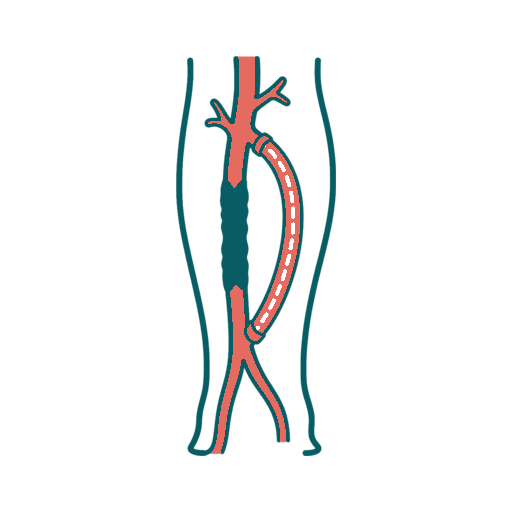
Lower-limb bypass surgery creates a new route for blood around a narrowed or blocked artery using the patient's vein or a prosthetic graft. It may be considered for severe walking limitation, ischaemic rest pain, non-healing wounds or gangrene when anatomy and expected durability favour bypass. It is an open operation and should be compared with medical treatment and endovascular options.
Who May Be Considered?
- Chronic limb-threatening ischaemia with a salvageable foot
- A long or complex blockage less suitable for angioplasty
- Failure or limited durability of previous endovascular treatment
- Acceptable heart, lung, kidney and wound-healing risk
Assessment and Tests
- Detailed arterial imaging from inflow to the foot
- Vein mapping for a possible conduit
- Heart, lung, kidney, diabetes and infection assessment
- Functional, rehabilitation and life-expectancy review
How Treatment May Be Performed
Expose healthy artery above and below the blockage
Use suitable vein or graft as the bypass conduit
Connect the conduit so blood travels around the obstruction
Confirm flow and monitor the graft after surgery
How to Prepare
Optimise blood pressure, diabetes, nutrition and infection where time allows, and stop tobacco. Tell the team about all antiplatelet and anticoagulant medicines. Preoperative testing, fasting, skin preparation and hospital planning are individual.
Comfort and Anaesthesia Planning
Lower-limb bypass is performed with general or regional anaesthesia selected according to the operation, patient health and anaesthesia assessment.
What to Expect During Recovery
Hospital stay and full recovery vary with bypass location and the reason for surgery. Incision discomfort, swelling and numbness can occur. Walking increases gradually, while wounds and graft flow are checked. Recovery may take several weeks and can be longer when tissue loss or infection is present.
Risks and Limitations
Risks include heart or lung complications, bleeding, infection, wound problems, kidney injury, graft blockage, leg swelling, nerve symptoms, reintervention and limb loss. The expected benefit should justify the greater physiological stress of open surgery.
Alternatives to Consider
Medical therapy and structured exercise may suit stable claudication. Angioplasty or stenting can be preferable for selected anatomy or higher surgical risk. In a non-salvageable or severely infected limb, amputation may provide the safer functional pathway.
Follow-Up After Treatment
Antiplatelet and cholesterol medicines, tobacco cessation, walking, wound care and Doppler surveillance protect the result. A sudden return of pain, coldness, numbness or loss of pulse after bypass requires emergency assessment.
Discuss Treatment With Dr. Pragna
Bring original scans, written reports, current medicines, previous procedure notes and a short timeline of symptoms.
Frequently Asked Questions About Lower-Limb Bypass Surgery
These questions cover suitability, preparation, procedure, recovery, risks, alternatives and follow-up.
Lower-limb bypass surgery creates a new route for blood around a narrowed or blocked artery using the patient's vein or a prosthetic graft. It may be considered for severe walking limitation, ischaemic rest pain, non-healing wounds or gangrene when anatomy and expected durability favour bypass. It is an open operation and should be compared with medical treatment and endovascular options.
It may be considered for people with chronic limb-threatening ischaemia with a salvageable foot, a long or complex blockage less suitable for angioplasty, failure or limited durability of previous endovascular treatment, acceptable heart, lung, kidney and wound-healing risk. A consultation and imaging are required because a matching symptom does not automatically make someone a procedure candidate.
Lower-Limb Bypass Surgery may be minimally invasive, open surgical or a coordinated combination depending on the exact technique. The incision, hospital stay and physiological stress should be explained for the option actually being considered.
Assessment may include detailed arterial imaging from inflow to the foot, vein mapping for a possible conduit, heart, lung, kidney, diabetes and infection assessment, functional, rehabilitation and life-expectancy review. Additional tests are selected according to age, kidney function, other illnesses and the urgency of treatment.
The planned steps can include expose healthy artery above and below the blockage, use suitable vein or graft as the bypass conduit, connect the conduit so blood travels around the obstruction, confirm flow and monitor the graft after surgery. The treating team should explain the exact device or surgical approach, alternatives and the reason it fits the patient's anatomy.
Lower-limb bypass is performed with general or regional anaesthesia selected according to the operation, patient health and anaesthesia assessment.
Hospital stay and full recovery vary with bypass location and the reason for surgery. Incision discomfort, swelling and numbness can occur. Walking increases gradually, while wounds and graft flow are checked. Recovery may take several weeks and can be longer when tissue loss or infection is present.
Risks include heart or lung complications, bleeding, infection, wound problems, kidney injury, graft blockage, leg swelling, nerve symptoms, reintervention and limb loss. The expected benefit should justify the greater physiological stress of open surgery.
Medical therapy and structured exercise may suit stable claudication. Angioplasty or stenting can be preferable for selected anatomy or higher surgical risk. In a non-salvageable or severely infected limb, amputation may provide the safer functional pathway.
Antiplatelet and cholesterol medicines, tobacco cessation, walking, wound care and Doppler surveillance protect the result. A sudden return of pain, coldness, numbness or loss of pulse after bypass requires emergency assessment.
Bring Your Scans and Current Treatment Advice
A structured vascular review can help you understand suitability, alternatives and next steps.

Specialist evaluation and treatment for conditions affecting arteries, veins, circulation, wounds and dialysis access.
Vascular Care
Patient Information
Appointments
Clinic contact details and consultation timings can be added after confirmation.
© 2026 Dr. Pragna Vascular. Privacy Policy · Medical Disclaimer